



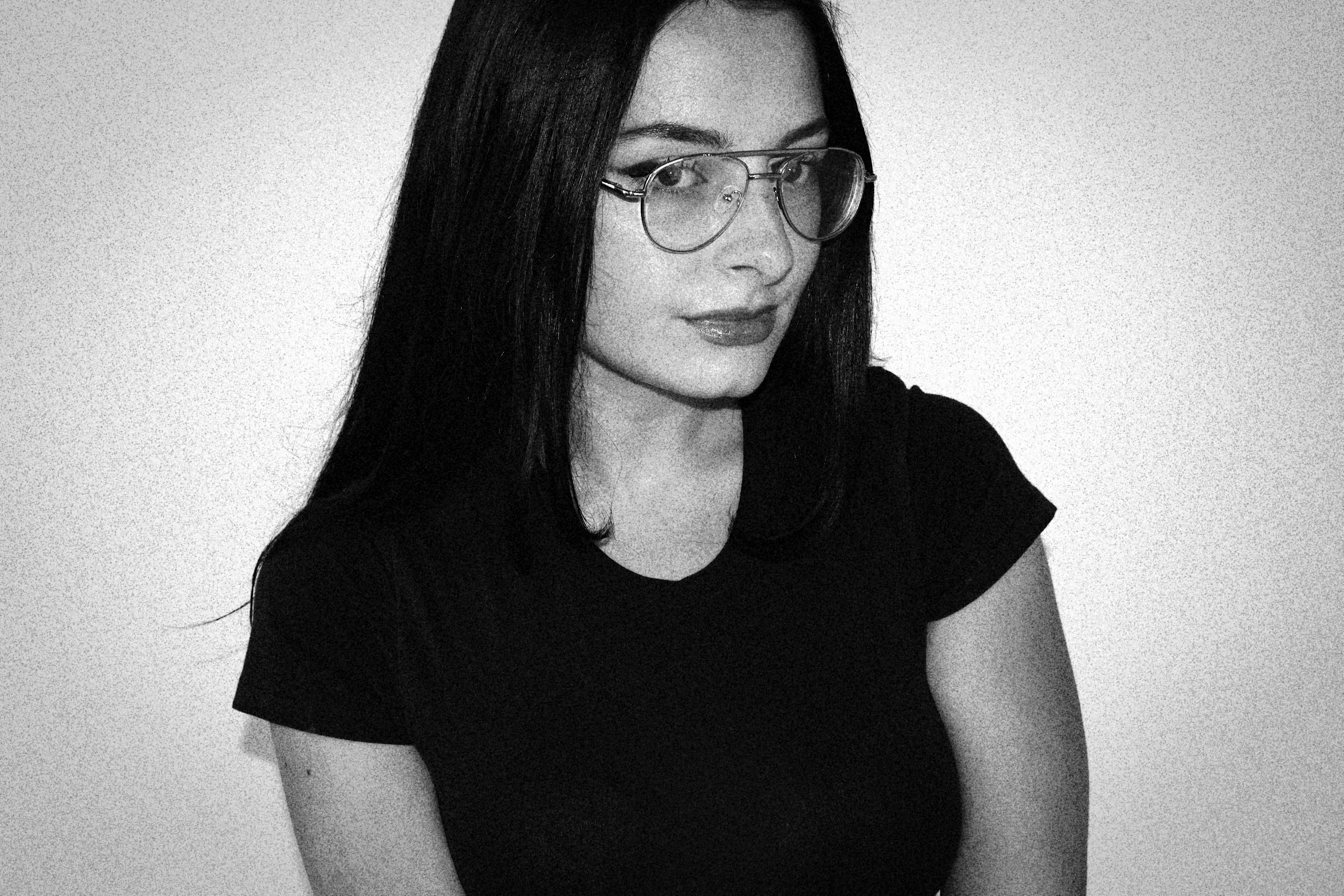
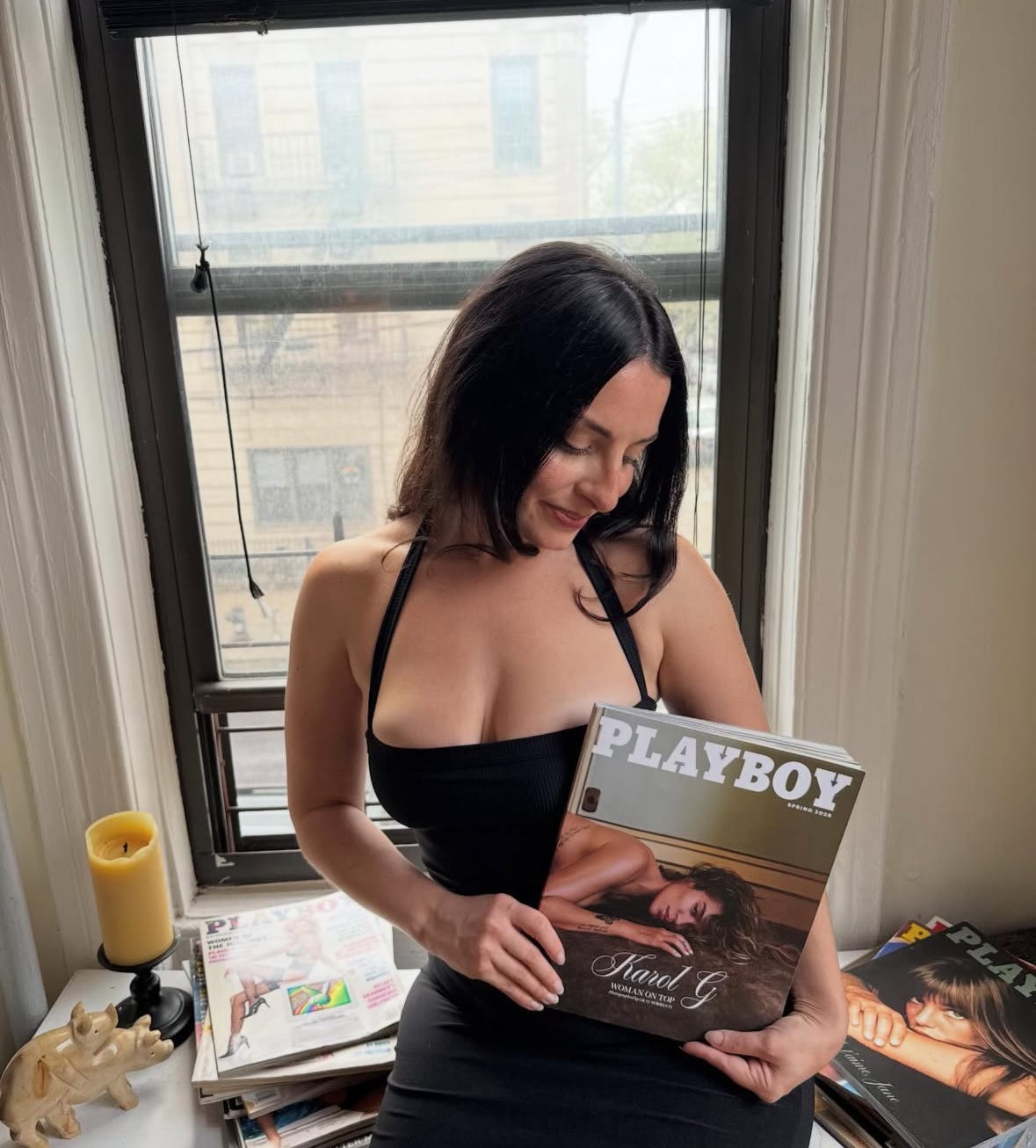
For the fifth edition of Sexy Jobs, I’m joined by Magdalene J. Taylor , a sex and culture writer and senior editor at Playboy, arguably the sexiest workplace known to man. We talked about the importance of “getting your reps in” as a writer, how to balance your personal and work life as a creative and how she ended up working at one of the most iconic media publications, as well as her take on where Playboy fits into the current cultural landscape and the place of print erotica in 2026. You can listen to our entire conversation here or check out the highlights below.
How would you define a Sexy Job?
When you first reached out to me with the Sexy Jobs name, I don’t know if you’re aware, but there’s this old website that was called something like sexyjobs.com, and it was all like, sex work adjacent types of sexy jobs.
Whenever I tell people that I have a series on Sexy Jobs, I get a range of reactions. Especially when I’m talking to serious adults, they’re interested in what that entails.
I love the term sexy jobs, because I do think that I have a sexy job. Perhaps the defining thing is that a sexy job is a job that you want to talk about at parties, and that people want to hear about. I feel like my job is sexy in that people are curious about it. Not just specifically about working with Playboy, which is a huge part of it, but also being a writer. [These things are] inseparable from who I am as a person. It kind of encompasses my whole identity, and whether that’s sexy or not, I don’t know, but there’s certainly a lot of intrigue associated with my job. So for me, that’s what makes the job sexy, a little bit of intrigue.
I feel like if you’re doing something creative, you don’t really have that [work and personal life] separation. Your colleagues are also your friends. I was trying to figure out how to navigate that; my first editor was also a really good friend of mine, and I used to wonder can I text her about work? If we were just working together, I wouldn’t have her personal number. So, I get not really having that much of a separation.
Yeah, for better or worse. I often wish I could clock out and feel disconnected from my work. And while I do work in a nine-to-five structure, I don’t ever really feel detached from it.
And how did you end up at Playboy?
I have spent the last four years or so freelancing, and through all that, I established a solid enough name for myself as a Sex and Culture writer to the point where, when Playboy was relaunching, the editor associated with it at the time contacted me asking if I had any freelance pitches. I wrote a story for the relaunch issue, and then I was getting coffee with the editor a few months later and talking about what my next story could be, and I kind of threw it out there. If you need any editorial help, I’d love to throw my name out there, and he was like that’s sort of perfect, I need someone, and I don’t really want to go through a big hiring process. Everything just fell into place with me offering myself up in that way.
And what was your awareness of Playboy? I think my awareness of the magazine was pretty much just tits for a while, and then that shifted once I started studying literature. There were so many people who got their start there, and that’s something that people aren’t super aware of. So growing up, what was your awareness of both the magazine and the brand, and later as a Sex and Culture writer?
Growing up, I think I probably had similar associations of naked women. I was also a child in the early 2000s; there was a lot of Playboy Bunny logo stuff. There was Girls Next Door on TV. Looking back, I have this very nostalgic, Y2K imagery of Playboy. And then once I reached High School and was really interested in being a writer, I think that’s where I developed a bit more of an understanding of Playboy as a literary entity. I was really into Hunter S. Thompson in High School, and would have said that working for Playboy was my dream job, and I kept thinking that throughout college. I’ve always really loved the iconography, loved the writing, just felt very fond feelings towards Playboy. When the opportunity came around, I obviously had to jump. It’s hard to digest the reality of that. If only I could tell my seventeen-year-old self, my twenty-one-year-old self, my twenty-five-year-old self, even, that this would be the case, what a delight that would be.
Since you came in with the relaunch, where do you think Playboy fits? We’re so desensitised and at the same time [erotic and pornographic imagery is] so readily available. My morning research of looking through old centrefolds, I was shocked by how different that was from the first time I ever encountered nudity online. And then looking through the writing, and I’m aware I’m in a very specific bubble, but for me [and a lot of the people around me], it’s a very respected destination for writing as well. So, where do you see it falling into the cultural space now?
Well, there’s always been the joke of like I read Playboy for the articles, and it’s a joke because there’s naked women in the magazine, but it’s also 100% true. As you said, [many of] the literary greats of the 20th century got their start in Playboy. So, people genuinely read Playboy for the articles, and they also enjoy the pictures of naked women. It’s such a funny dynamic, because print nudity, especially in the form that it’s displayed in Playboy specifically, where it’s very sensual, and not gynaecological, I would say, no disrespect to Hustler or actual pornographic magazines, but it’s a totally different entity. And I think that looking through both old and new issues, it really solidified in my mind that there is a need for that type of middle ground erotic content where it’s approachable and accessible without being jarring or over-familiarising. It’s a much softer landing into nudity than what a lot of us got with internet pornography, that’s for sure.
Do you think we are more open to talking about sex and sexuality?
I think I’m in a pretty unique position where I oscillate between these two worlds of [being] very sexually open, but also there’s so much sexual conservatism on the Internet, whether it’s from young people who feel that they came up in an ultra-pornographic world and want to reject that, or just politically conservative people. A decade ago, there was a lot of talk about sex positivity; there’s a real opposite attitude amongst a lot of people today. With that, the type of erotic content in Playboy has been swept up in that to the point where people don’t really realise that there is such a difference between print erotica and hardcore video pornography. So that’s an interesting dynamic to navigate today; people need to be reintroduced to the value and existence of this type of material.
Now, on a slightly more personal end, I write a lot about my personal life, and I’m aware that your writing is not that, but you are writing a lot about sex and relationships. Do you find that that has ever affected your personal relationships, and how have you navigated the crossover between work and your personal life?
It’s been really important to have a line in the sand of not talking too much about my personal life. I’m actually engaged to be married, and I keep a lot of my personal life relatively private online. I’ve been successful in my personal romantic life because I have a very supportive partner who’s been willing to navigate all of this with me, and I think keeping some of it private has been crucial to that. One thing that’s always struck me, though, is that I do encounter people out in the wild who know that I’m a sex writer, and take that as a sign that I must be completely sexually available, no flirtation even required. That part is very bizarre.
What’s it like working for a publication that traditionally has a very male audience? Earlier today, I was talking to a friend, and I mentioned I was interviewing a Playboy editor, and they asked how did you meet him?! and I had to be like actually it’s a her. A lot of people have this very distinct image of Hugh Hefner and the Playboy Bunnies, and this primarily male audience. What’s it like to work in that environment?
It’s really interesting because right now, I would say media in general is a very woman-dominated field, and that’s almost a problem in a way. I think there should be more men back in the magazine space, but right now it’s very woman-dominated. And obviously that’s great for me and the women in media that I love, but it could become a problem for men’s media at large. Writing for a male audience, with my Substack and even with Playboy, there is a strong female readership, but people will always put a lot of baggage about gender upon that dynamic. By virtue of my being a woman writing about men in any capacity, there are a lot of assumptions that I’m anti-men. There are plenty of people who see a woman criticising any aspect of masculinity, like if I’m writing about Andrew Tate or something like that and how it’s harmful to men, there are people who take that as an attack on masculinity. The reality is that I really love men, to the point where a lot of women accuse me of liking them too much, to the detriment of women. There’s so much back and forth there. Men often think that I’m too favourable towards women. Women think I’m too favourable towards men.
You can’t win.
I can’t win. I’m really trying to be favourable towards everybody. When you’re a woman who’s writing for a male audience, there’s also going to be a little bit of sexual projection there, where I’m a woman who’s visible online and writing about sex. And so that in and of itself is a titillating prospect for people. I don’t really mind that my womanliness has worked in my favour in my career.
I get that. The way I look has definitely opened certain doors and also influenced the way people engage with my work. People aren’t reading my work because they think I’m hot, but the way that they engage with your writing, [especially in the age of social media], you can’t really separate it from how you look.
Yeah, and you know, it would be awesome if more people read my work because they thought I was hot, like I would be totally okay with that dynamic. But that’s not really how the internet works.
Unfortunately. I would be posting more thirst traps if that were the case.
But I think that in whatever field people work in, attractiveness does play a role in it. Unfortunately, Clavicular is right about that part; that being attractive does help. But it’s obviously not the end-all, be-all.
And what would you say is the biggest challenge you have in your career right now?
Figuring out what paths I want to take. I’m very interested in writing a book at some point, and that’s such a big undertaking. Sometimes it is very difficult to decide if this story that I want to write is a fit for Playboy, or is it better suited for my Substack or whatever else. That is one of the inherent things of being a writer is that there’s rarely one firm location for your work.
And what advice would you give to someone who wants to go down the same path? Or, and this is when I really milk these interviews for my personal gain, what would you tell your twenty-three-year-old self? Or what was the best advice you got when you were starting your career?
When I was twenty-three, I was writing two articles a day for this publication called Mel Magazine. And at the time, I sort of felt like it was torture, and I was writing about things that I didn’t always want to be writing about, I was just taking assignments. But the routine of that, “doing your reps” as a writer, is critical. I always knew I wanted to be a writer; I didn’t always know what I wanted to write about. I think that’s a common theme if you’re a nonfiction writer; sometimes, I still don’t know what I want to write about. Getting those reps in really helped me first figure out what I enjoyed writing about most, and what made the most sense for my beat, what I felt most passionate about. It also just makes you a much better writer to write as much as possible. It can be really hard, especially now, when there are so few jobs where you can have a livable wage writing two articles a day as your full-time job. Those kinds of gigs are really hard to come by right now.
Even the luxury of having an editor who is going to make your writing better and push you to do better. That has been huge for me. Editing is a lost art, and having a good editor makes a world of difference. I tell people that my Substack is me getting my reps, and I get to write about whatever I want, but it’s also objectively not my best writing because I’m the only person looking through it.
Right, that’s a big factor. Being edited as a young writer is such a huge privilege, and I wish there was a better climate for that. Another practical piece of advice I would give people is to sign up for all the open call for pitches types of newsletters. There’s one called Study Hall that I think is one of the best sources of information on what places are looking for writing right now.
It might take a very long time to properly craft a pitch that gets accepted, but that’s the only way to do it. Pitch and pitch until something sticks, and you can properly build your portfolio from there. With time and with freelancing and pitching around, you will eventually find a dynamic that works for you, whether it’s an editor you like working with or a balance of how much effort it takes to produce this work and get paid for it in a way that allows you to exist and not burn yourself out.
My other piece of advice is that you gotta really want to do it. When people want to be writers, and they’re asking for advice, it’s like first let’s check that you can’t really see yourself doing much else, or you can’t go forth with the rest of your career without knowing that you at least gave it a shot. The other thing is that you can be a writer and still be somebody who only gets to publish something a couple times a year. It’s totally fine and doesn’t make anybody less of a writer to also have to do something else, especially if you’re a young person trying to get your footing. You probably should do something else1, and those experiences will make you a better writer because they’ll give you other avenues of information.
And for anyone who might want to pitch Playboy, what would be your advice?
I would say for digital stories, the biggest thing is making it sound like something a man would want to read. Right now, I get a lot of great pitches that feel like they should be in a women’s magazine or a queer magazine, they’re not exactly a men’s magazine type of pitch. While Playboy has evolved as a brand and we are definitely still writing stories that are interesting to women, we still have to be focused on a male readership. I’m really interested in stories that have nuance in their angles. All the traditional pitch advice applies: give me a good headline, the who, what, where, when and why in a paragraph, tell me how many words you think it is, your timeline, all the practical matters. Give me a little bit about who you are. But above all, if you want to pitch Playboy, please make it something that a man could hypothetically want to read.
Alright, thank you so much!
Thank you so much for having me!
You can check out more of her work here. Magdalene also writes Many Such Cases on Substack. If you (or someone you know) has a Sexy Job and would be down to talk about it and give me life advice in the process, please reach out to sexyjobsjulia@gmail.com.
And if you’re new to the Sexy Job universe, check out the piece that started it all:

on a similar note, Caroline Beuley said If You Want to Be an Artist, Don’t Quit Your Day Job…Yet
 | A guest post by
|
If anthro of religion doesn’t work out I know what I’m pursuing
so good!